


BB Tool
Carbide Circular Slitting Saw for Metal | 40–63mm
Carbide Circular Slitting Saw for Metal | 40–63mm
Verfügbarkeit für Abholungen konnte nicht geladen werden
Carbide Circular Slitting Saw | 40–63mm
Solid-carbide circular slitting saw for precision slotting and narrow cut-off operations. Variants combine different outside diameters, bore sizes and blade thicknesses, so all three dimensions should be checked before ordering.
How to Select a Slitting Saw
- Outside diameter: determines available cutting depth and machine clearance.
- Bore diameter: must match the arbor or saw holder.
- Blade thickness: select according to the required slot or cut width.
- Holder: this saw blade requires a compatible toolholder/arbor; confirm whether it is included separately.
Machining Note
Thin slitting saws are sensitive to runout, vibration and side loading. Use a rigid arbor, accurate spindle setup, adequate clamping and suitable cooling.
Carbide Circular Slitting Saw


☆NOTICE: Required to use with the toolholder which is NOT INCLUDED in this link, a compatible holder or arbor is sold separately; confirm compatibility before ordering.

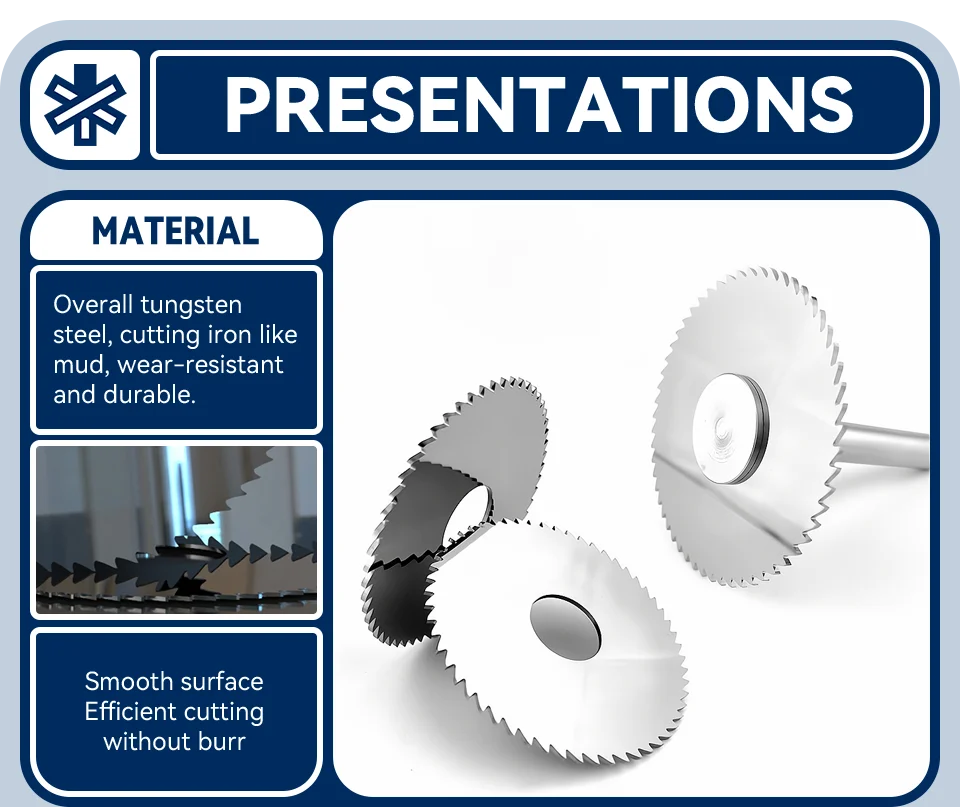
☆Material:
Solid-carbide construction provides wear resistance and rigidity for precision slotting and cut-off work.
Ground blade faces and controlled geometry support stable cutting when runout and clamping are properly controlled.
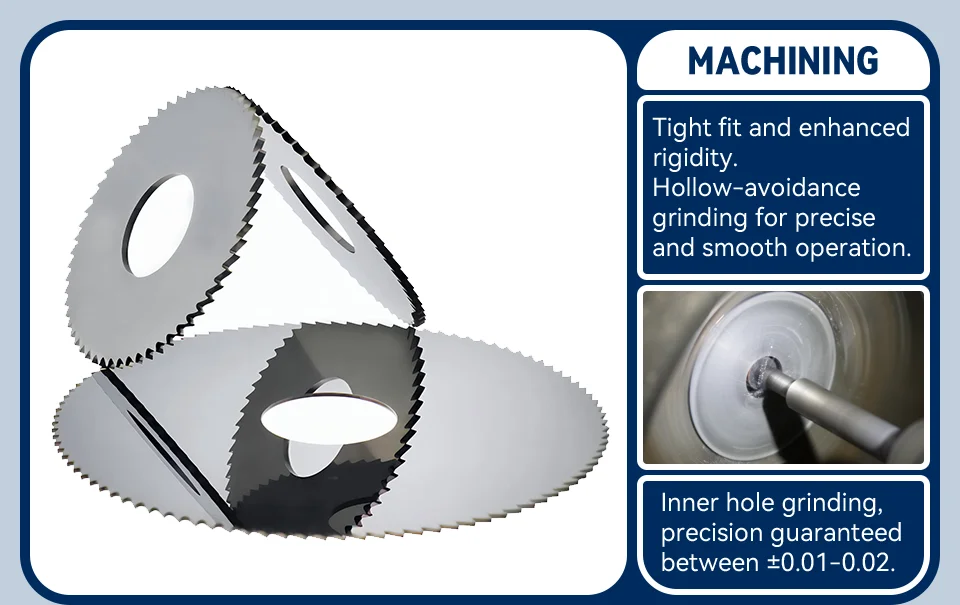
☆Processing:
Precision:
Inner hole——+0.01~0.02
Outer——±0.02
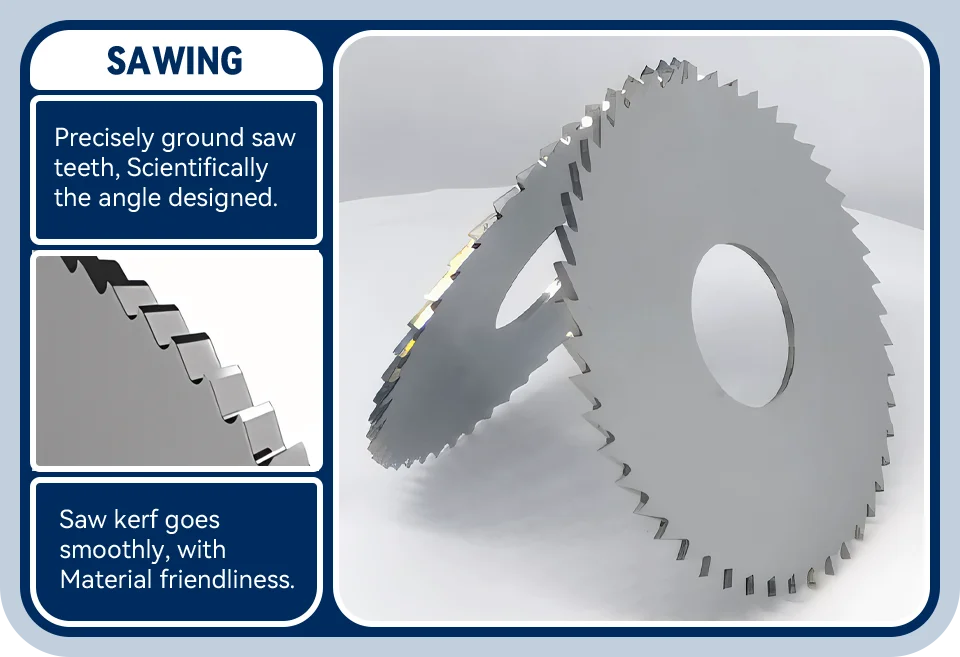
☆Sawing:
Precision-ground teeth are designed for smooth slotting when the saw is correctly mounted and operated within suitable cutting conditions.



The thinner the saw blade is, the more sensitive it is to vibration and tensile stress when using it. If there is radial runout or axial runout, it is easy to cause damage.
Bad. Therefore, the milling machine should operate in a stable state, that is, the machine tool has high precision, good rigidity of cutter bar and stable transmission. Feed quantity per tooth
Constant and sufficient cooling. The specific requirements are as follows:
1. The accuracy of the milling cutter installed on the cutter Rod shall generally meet the following requirements: radial runout <0.02mm, axial runout ≤ 0.01mm.
2. As long as the milling depth of the milling cutter is not affected, clamp the two sides of the blade on the cutter rod with a large flange plate as much as possible, in order to eliminate vibration and avoid lateral compression. Generally, the diameter of the flange plate is not less than 1/3 of the outer diameter of the saw blade.
3. Reasonable milling linear speed Vc and feed rate Sz per tooth should be selected. Generally, under the same conditions, the whole hard alloy saw blade milling cutter can choose Vc faster than the high-speed steel saw blade milling cutter, but the feed rate per tooth should be lower than the feed rate of high-speed steel. Sz can generally be set between 0.005-0.025/tooth. The specific parameters should be determined by the user according to the speed of milling machine, the properties of the milling, thickness, number of teeth, milling depth and other factors are determined.
Vc:
P: 70~150, 50~80
K: 80~120
M:70~120
N:200~350
S:20~50
Outer Diameter——Cutting Depth
40mm——3mm
50mm—— 5mm
63mm——8mm
70mm——10mm
75mm——12mm
80mm——15mm
100mm——20mm
125mm——30mm
FAQ
Is the holder included?
The original product information states that the toolholder is not included in this listing. Select a compatible arbor separately.
Why are bore size and blade thickness important?
The bore must fit the arbor, while blade thickness determines the approximate slot width.


