

BB Tool
BL2060 Solid Carbide End Mill | 2-Flute & 4-Flute CNC Cutter
BL2060 Solid Carbide End Mill | 2-Flute & 4-Flute CNC Cutter
No se pudo cargar la disponibilidad de retiro
BL2060 Solid Carbide End Mill for Alloy Steel & Mold Steel
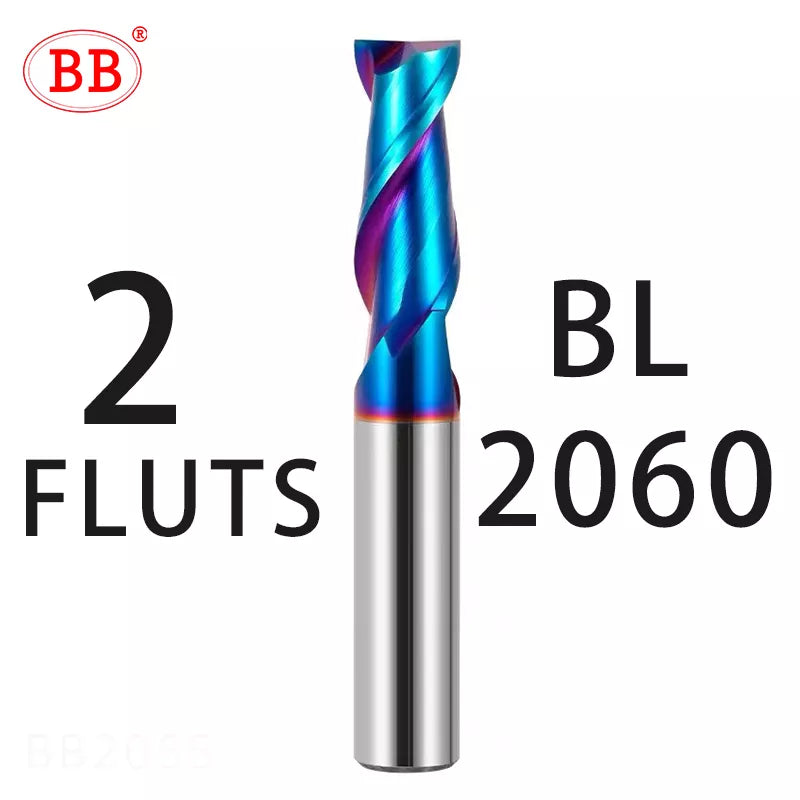
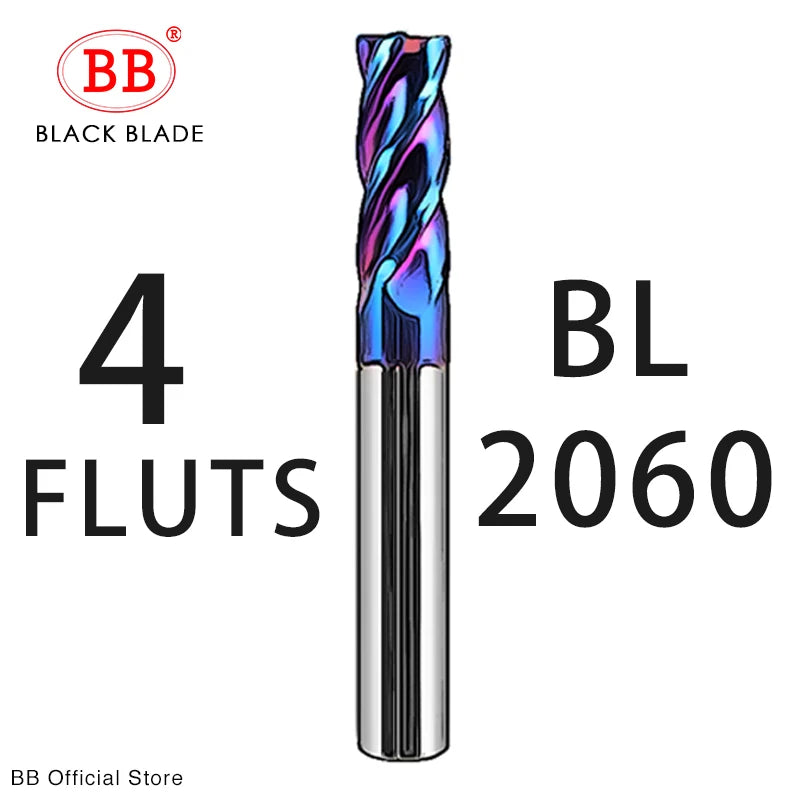
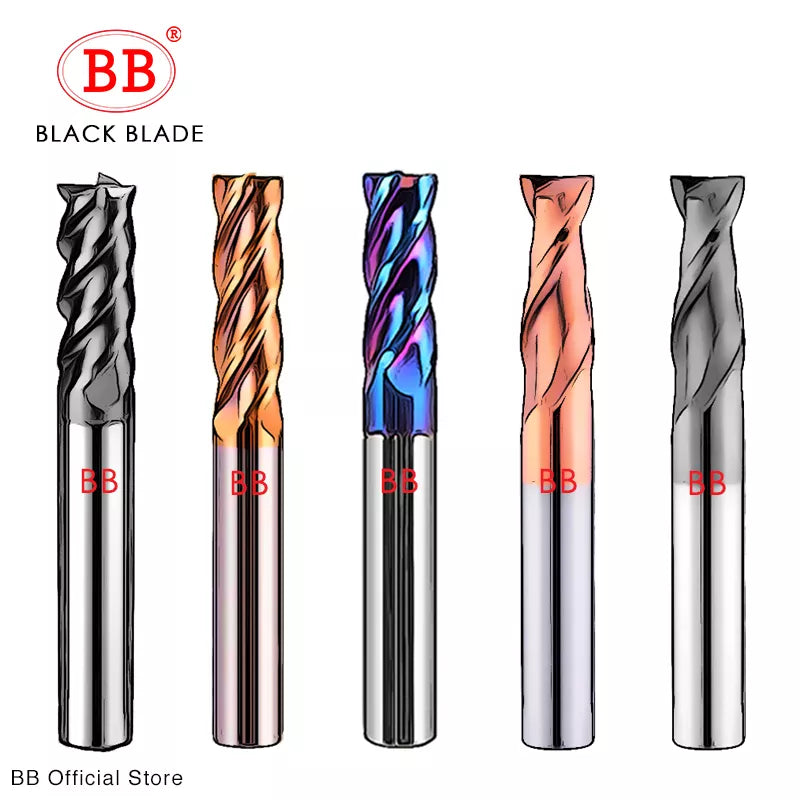
A 2-flute and 4-flute solid carbide end mill for alloy steel and mold steel in the HRC 35–55 range, and for ductile and grey cast iron. The negative-rake, high-strength flute geometry keeps carbide behind the cutting edge, so the tool holds its edge through side milling, ramping, semi-finishing and finishing rather than only in light finishing passes.
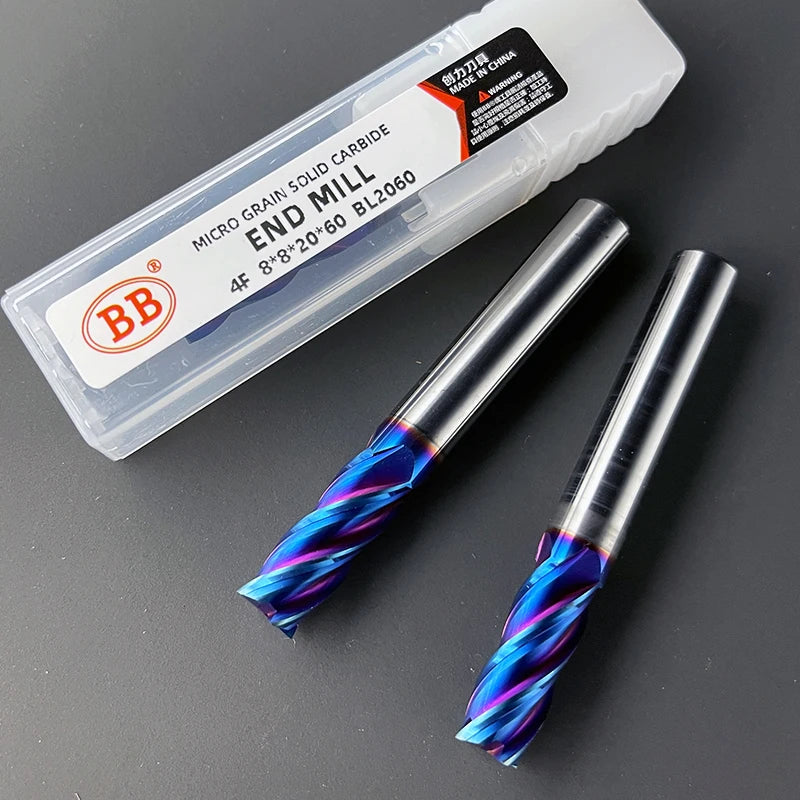
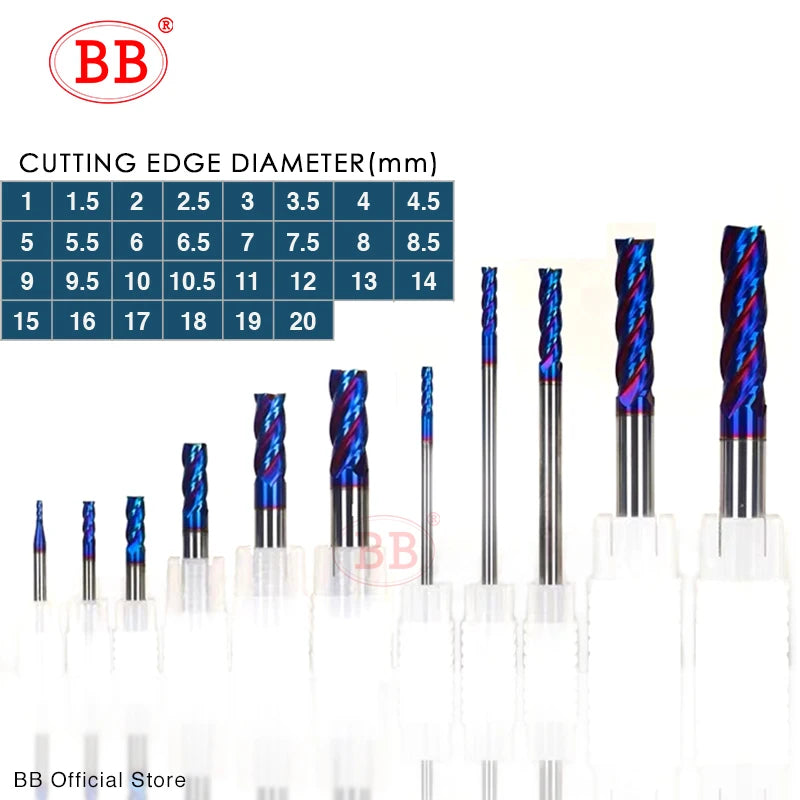
Reading the size options — Ø (cutting diameter) × shank Ø × flute length × overall length, all in mm. Example: 6×6×20×75 = 6 mm cutting diameter, 6 mm shank, 20 mm flute, 75 mm overall.
Substrate and coating
- GU25UF carbide, 12% Co, 0.4 μm grain
- Hardness HRA 93, transverse rupture strength 4000 N/mm²
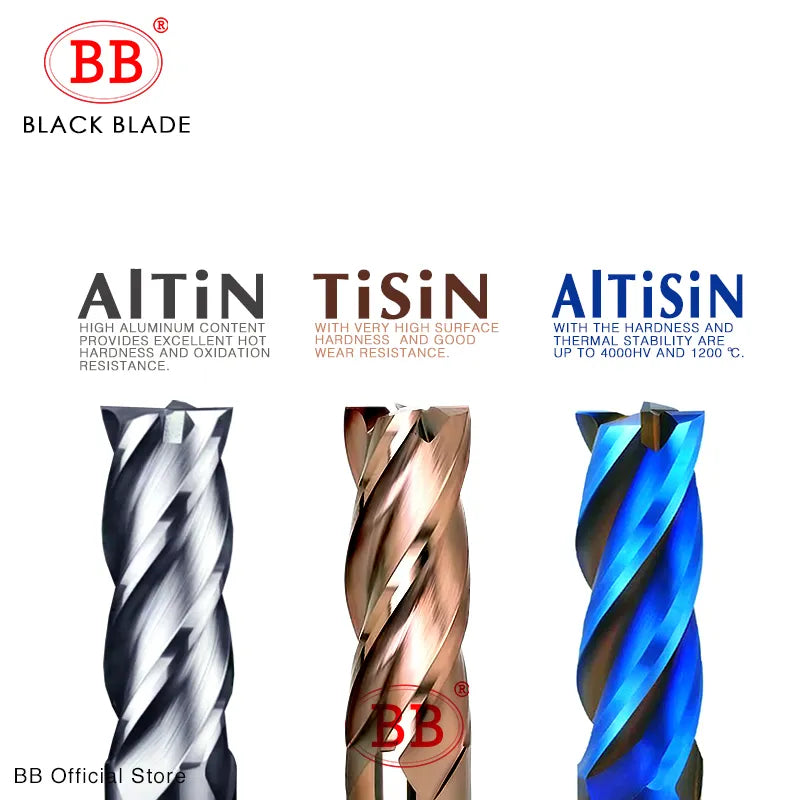
- Titanium aluminium silicon (TiAlSi) coating: 2.1 ± 0.3 μm thick, hardness 35 ± 3 GPa, friction coefficient 0.35, stable in service up to 1100°C
Flute geometry
A negative rake angle is paired with a reinforced core, putting more carbide directly behind the edge. That is what lets the edge survive interrupted cuts and varying stock instead of chipping at the first hard spot, and it is why one grade can cover both semi-finishing and finishing work.
Workpiece materials
Alloy steel and mold steel between HRC 35 and 55; ductile iron and grey cast iron. Choose BL2060 when the material is beyond what uncoated carbide will hold, but not yet in the range that calls for a dedicated hard-milling grade.
BK2055 or BL2060?
The two grades solve different problems, and which one you want follows from the material rather than from the size.
Stainless steel is gummy. Chips weld to the edge and build a built-up edge, and when that breaks away it takes carbide with it. Cutting heat also concentrates at the edge instead of leaving with the chip. BK2055's chromium aluminium silicon coating answers both: low friction so the chip does not weld, and an oxide layer that keeps the edge alive at temperature.
Cast iron is abrasive rather than sticky. Sand inclusions, scale and the hard particles in nodular iron grind the edge away. There is no built-up edge to fight — just fast flank wear. BL2060's titanium aluminium silicon coating is harder, so the edge resists that abrasion instead of rounding over.
| BK2055 | BL2060 | |
|---|---|---|
| Coating | CrAlSi (chromium aluminium silicon) | TiAlSi (titanium aluminium silicon) |
| Failure it prevents | Built-up edge welding to the cutting edge, then chipping when it breaks away | Abrasive flank wear from sand, scale and nodular iron particles |
| Workpiece | Stainless, carbon and alloy steel up to HRC 45 | Alloy and mold steel HRC 35–55; ductile and grey cast iron |
| Stage | Roughing to semi-finishing | Semi-finishing to finishing |
2-flute or 4-flute
2-flute gives more chip room, which suits slotting and cuts where evacuation is the limit. 4-flute adds cutting edges and edge support, and holds a better finish at higher feed. For side milling, ramping and finishing, 4-flute is the usual pick; take 2-flute when the slot is full width or chips have nowhere to go.
Diameter tolerance
- 1 < D ≤ 6 mm: −0.010 to −0.030
- 6 < D ≤ 10 mm: −0.015 to −0.040
- 10 < D ≤ 20 mm: −0.020 to −0.050
Please confirm diameter, shank diameter, cutting length, overall length and flute count in the variant selector before ordering.
Machining notes
Solid carbide needs a rigid machine, an accurate holder and controlled runout. Speed and feed follow the actual diameter, flute count, material, overhang and machine rigidity — there is no single setting that covers the whole size range. On long-reach or small-diameter variants, lighten the cut and check rigidity before taking a full-depth pass.
Related tools
A corner radius end mill is the better choice where edge strength at the corner matters. For aluminum and other non-ferrous work, a 3-flute aluminum series clears chips more freely.
FAQ
Will one set of cutting parameters suit every size?
No. Diameter, flute count, overhang and machine rigidity all move the numbers, so treat any starting parameter as a starting point and adjust from the first cut.